

Project Overview
Client: Residential Property Owner
Location: 910 Baynton Avenue, Bronx, NY 10473, located in front of a historic brownstone in a quiet residential block where neighbors and passersby move along the street throughout the day.
Service Provided: NYC DOT sidewalk violation removal and replacement of two severely damaged sidewalk slabs with approximately 50 square feet. The damage was caused by the aggressive root growth of a nearby tree.
Permits Required:
- Sidewalk Construction/Repair Permit
- Sidewalk Closing Permit
- LPC Permit
- NYC Parks Department Permit
Permit Fee: $70 (fixed rate for up to 300 linear feet) for each permit. Although the LPC and tree work permit are free of charge, the remaining two permits cost $140.
Estimated Project Cost: $2500–$3,000.
Project Execution Timeline: Approximately two days after permits were secured, with work carefully scheduled on-site to minimize disruptions for residents and daily passersby.
Sidewalks in front of historic homes carry a different kind of weight, both literally and in character. At 910 Baynton Avenue in the Bronx, a beautiful brownstone's entrance was being undermined by something growing just beneath the surface: an aggressive nearby tree, whose roots had pushed two sidewalk slabs into a severely cracked and uneven state. What began as a structural nuisance had grown into an NYC DOT violation, putting the property owner at risk of fines and a ticking compliance clock. The challenge was clear: remove the violation, repair the damage at its root, and do it all without disrupting the quiet rhythm of a residential block.
The Challenge
The property presented several unique challenges:
Root-Driven Damage: An aggressive nearby tree had pushed up through the sidewalk, severely cracking two slabs and creating a serious trip hazard right at the entrance of a historic brownstone.
Active DOT Violation: The damage had already triggered a NYC DOT violation, starting a compliance clock; under city rules, repairs typically need to be completed within 75 days of a violation notice to avoid fines or city-performed repairs.
Residential Sensitivity: Unlike a commercial corridor, this was a quiet residential block, so the work needed to be scheduled and executed with minimal noise, mess, and disruption to neighbors.
Permit Complexity: Because the property sits in a historical landmarked area, the repair involved general sidewalk work, but with the material that must be the same as the existing, along with LPC approval and permit requirements, two separate permits were required, adding coordination steps the property owner didn't want to manage alone.
This project required a process that moved quickly from estimate to repair, kept the property owner informed at every stage, and resolved the violation cleanly, all without turning a quiet street into a construction zone for longer than necessary.
How Eden General Construction Inc. Approached the Project
Step 1: Free Inspection & Estimate (Day 0 – Day 1)
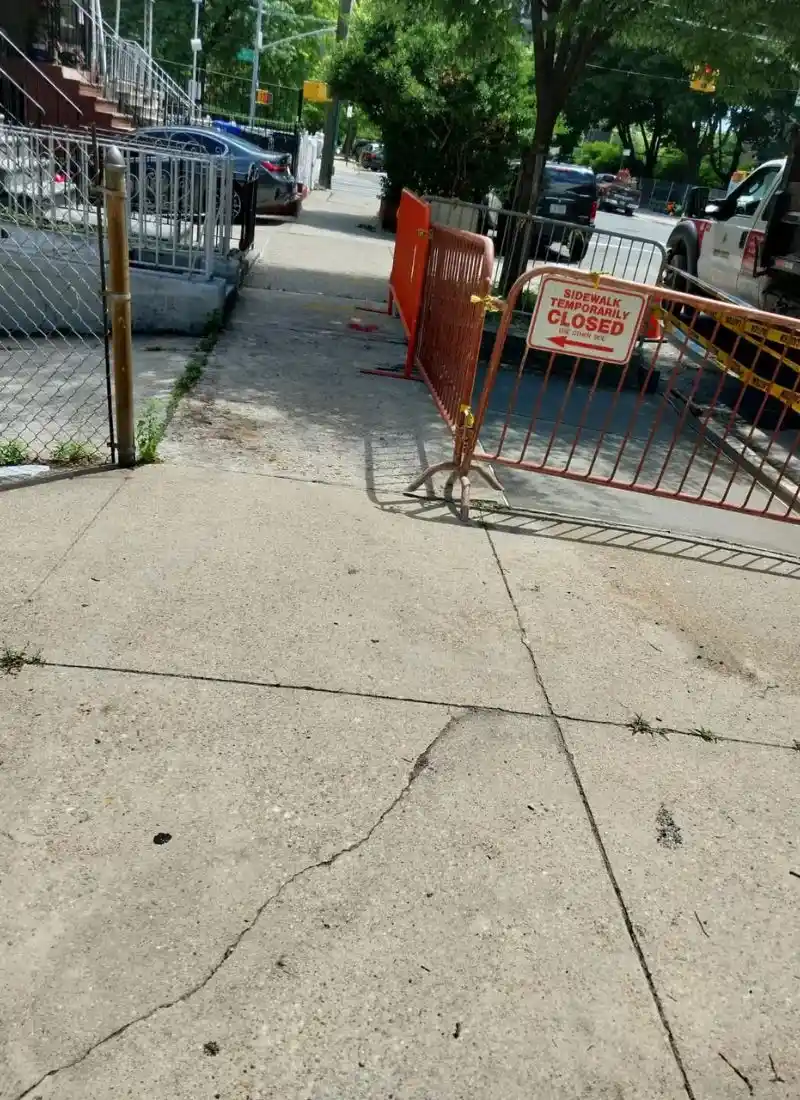
The process began the moment the property owner shared photos of the two damaged slabs along with the DOT violation notice. Our team reviewed the extent of the root damage and returned a clear, no-obligation estimate within 24 hours, viewable on the owner's phone and approved digitally with no paperwork hassle. With the estimate signed, the team immediately began preparing documentation for the sidewalk repair permits.
Step 2: Permit Filing & Scheduling (Day 3 – Day 14)
Once the estimate was approved, we filed both the Sidewalk Construction/Repair Permit and the Sidewalk Closing Permit with the NYC Department of Transportation along with the Landmark Preservation Commission for material approval. Because the damage involved tree root intrusion, the tree-related permit considerations were handled in-house, with no guesswork left to the property owner. Permit processing took a few business days, and the repair was scheduled to begin shortly after approval, with the team prioritizing clear communication and minimal disruption to the residential block throughout this phase.
Step 3: Sidewalk Repair (Day 14 – Day 16)
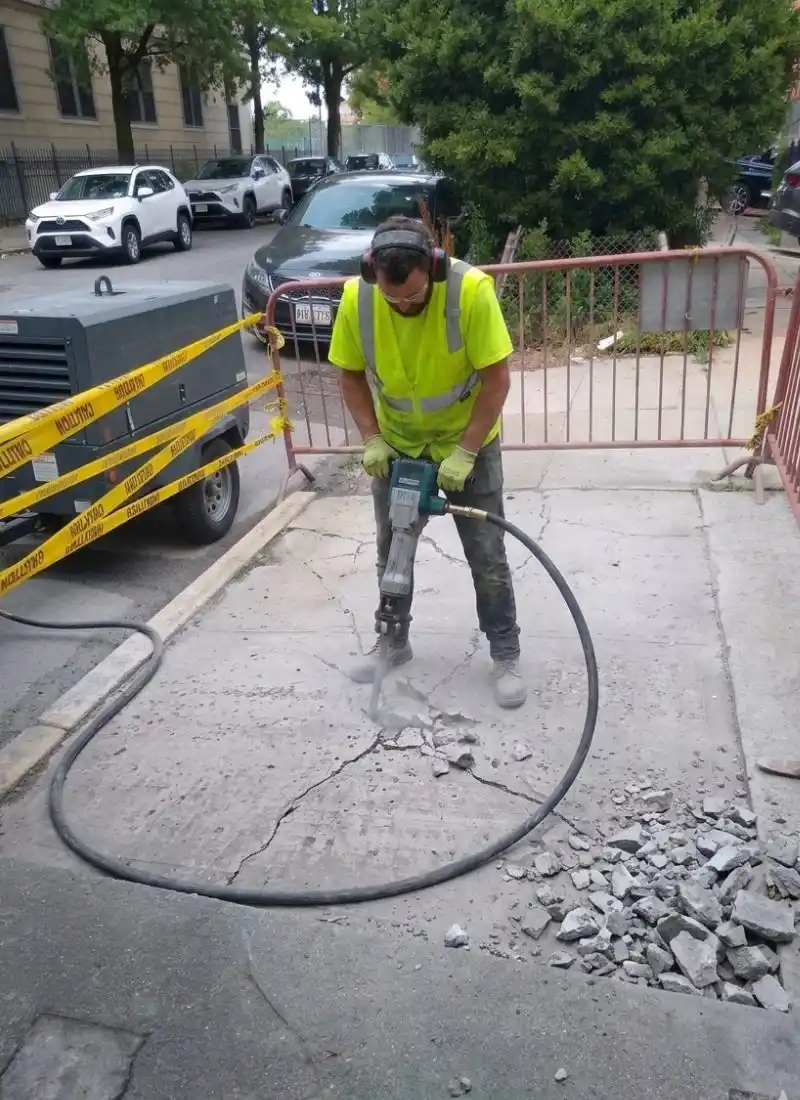
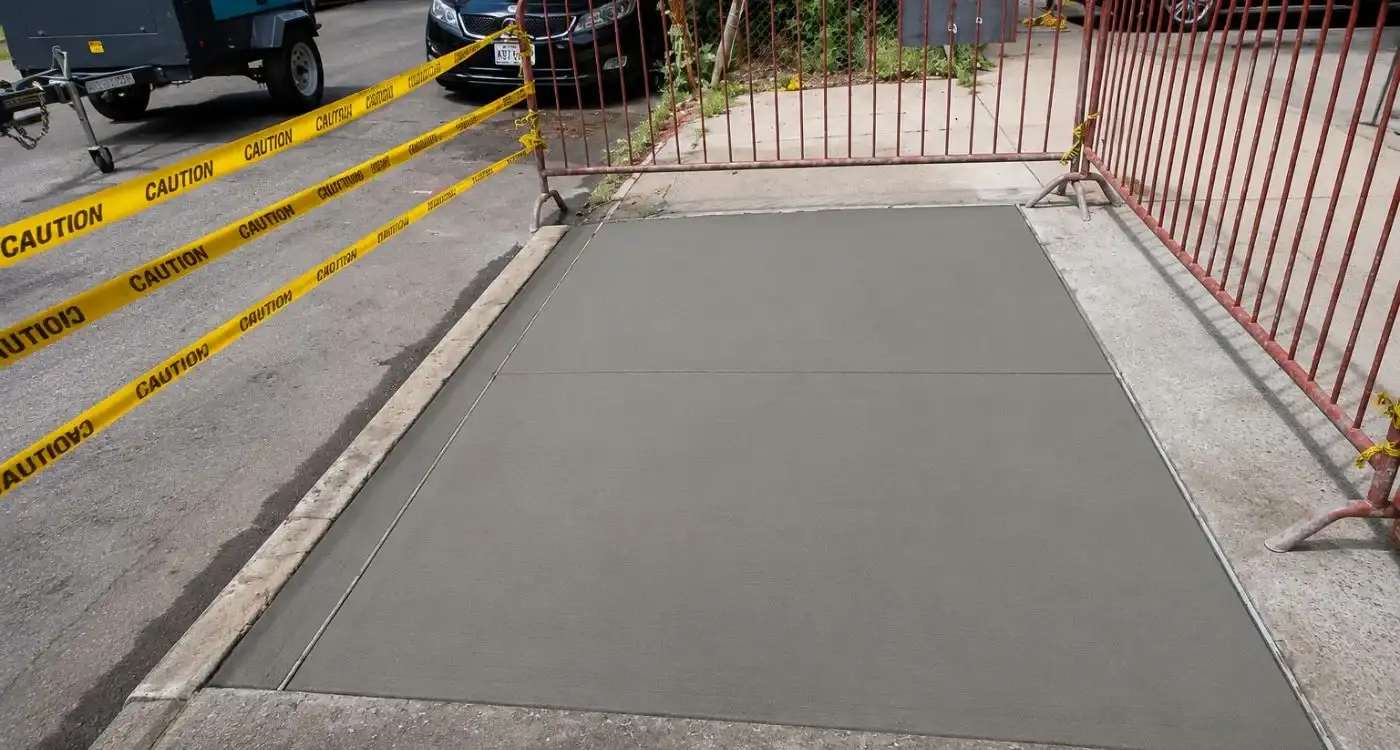
On the scheduled date, the crew arrived to remove the two severely damaged slabs, carefully working around the root system to limit further disturbance to the tree. A stable base was prepared, and new fresh concrete having 4000 PSI was poured and finished to NYC DOT standards. Safety barriers were used throughout to protect pedestrians on the residential block, and the work area was cleaned daily. In line with the typical range for projects of this scope, the repair itself was completed in just two days.
Step 4: Final DOT Inspection & Compliance (Day 16 – Day 60+)
With the repair complete, we coordinated the final DOT inspection on the property owner's behalf. The team stood by the work through the inspection process, ready to handle if any adjustments DOT requested at no additional cost, but the violation was officially dismissed in the very first inspection, and the property was brought into full compliance.
The Transformation
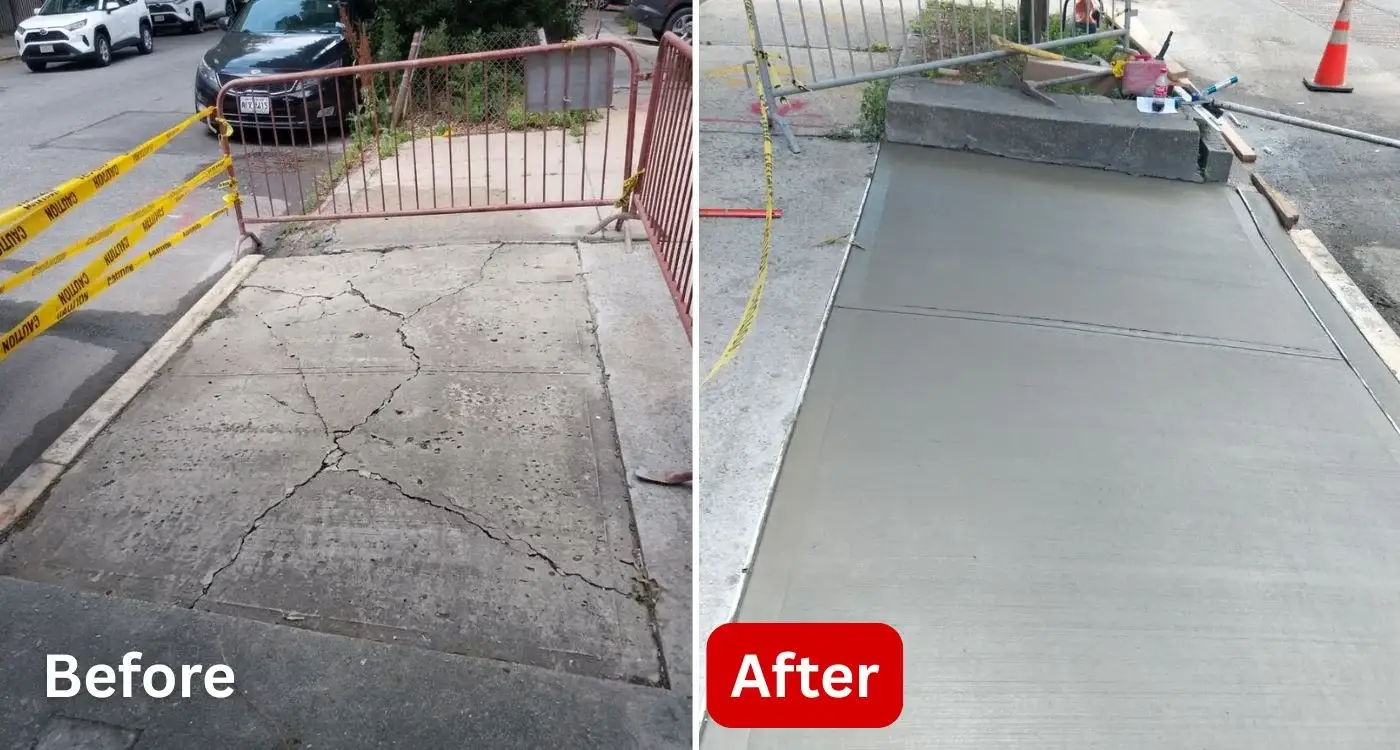
The difference was immediate and lasting. What was once a root-damaged, violation-flagged sidewalk became a smooth, level, and code-compliant entrance to the brownstone.
Before:
- Two sidewalk slabs were severely cracked and uplifted by aggressive tree root growth.
- The property carried an active NYC DOT violation with a compliance deadline looming.
- The damaged sidewalk created a trip hazard right at the entrance of a historic home.
- The property owner faced the prospect of navigating permits and city paperwork alone.
- The overall curb appeal of the brownstone was diminished by the visible damage.
After:
- Smooth, level, and durable concrete restored across both slabs.
- DOT violation resolved, with the property brought into full compliance.
- Safe walking surface for neighbors, visitors, and residents.
- The entire process, from estimate to repair, is handled with minimal owner involvement.
- The brownstone's entrance was restored to a clean, well-kept appearance while preserving the original appearance.
Results and Benefits
The completed project delivered measurable peace of mind for the property owner. First and foremost, the active DOT violation was resolved well within the compliance window, protecting the owner from fines, city-performed repairs, or liens against the property. By addressing the root cause of the damage directly, rather than simply patching over it, the repair also reduced the likelihood of the same two slabs failing again in the near future.
Beyond compliance, the streamlined three-stage process, estimate, permitting, and repair, meant the property owner never had to chase paperwork or guess at timelines. Eden managed the permit filings, scheduled the work to respect the quiet character of the block, and coordinated the final inspection start to finish.
The result is a brownstone entrance that once again reflects the character of the home it fronts: safe, solid, and welcoming.
Client's Feedback
While the client chose not to disclose their name, their satisfaction is evident. By praising our staff, they expressed:
"We'd been putting off dealing with the sidewalk violation because we didn't know where to start, but Eden made the whole thing easy. We sent a photo, had an estimate the next day, and they handled every bit of the permit process. The crew was in and out in two days, and our brownstone's entrance looks better than it has in years. We're relieved to have the violation behind us."
The Bottom Line
The sidewalk violation removal and slab replacement project at 910 Baynton Avenue stands as a clear example of Eden's ability to drive property owners smoothly from inspection to final DOT clearance. By combining a fast, transparent estimate process with efficient permit handling and root-aware repair work, the team resolved a serious violation and restored a historic Bronx brownstone's entrance in just a matter of weeks.